
On believing in Hashem
and modox gobbledygook


Gimpel the Kochleffel is writing an interesting series on Modern Orthodox Theologians positions of belief in God:
Look at his blog for the earlier posts.
If this sounds familiar, its because Binyamin Benjamin the Apikorus did the same thing:

Of course, if you take the time to read the whole thing, you’ll notice that R Rosensweig’s answers - and a few of the others (you can read them all here) - are all just examples of the same classic genre: Modern Orthodox Gobbledygook®. That’s when Modox theologians, severely afflicted with autoerotic sesquipedalianism, use a lot of long words to say very little. (This started with RJBS and his oedipal love for ontic ontology).
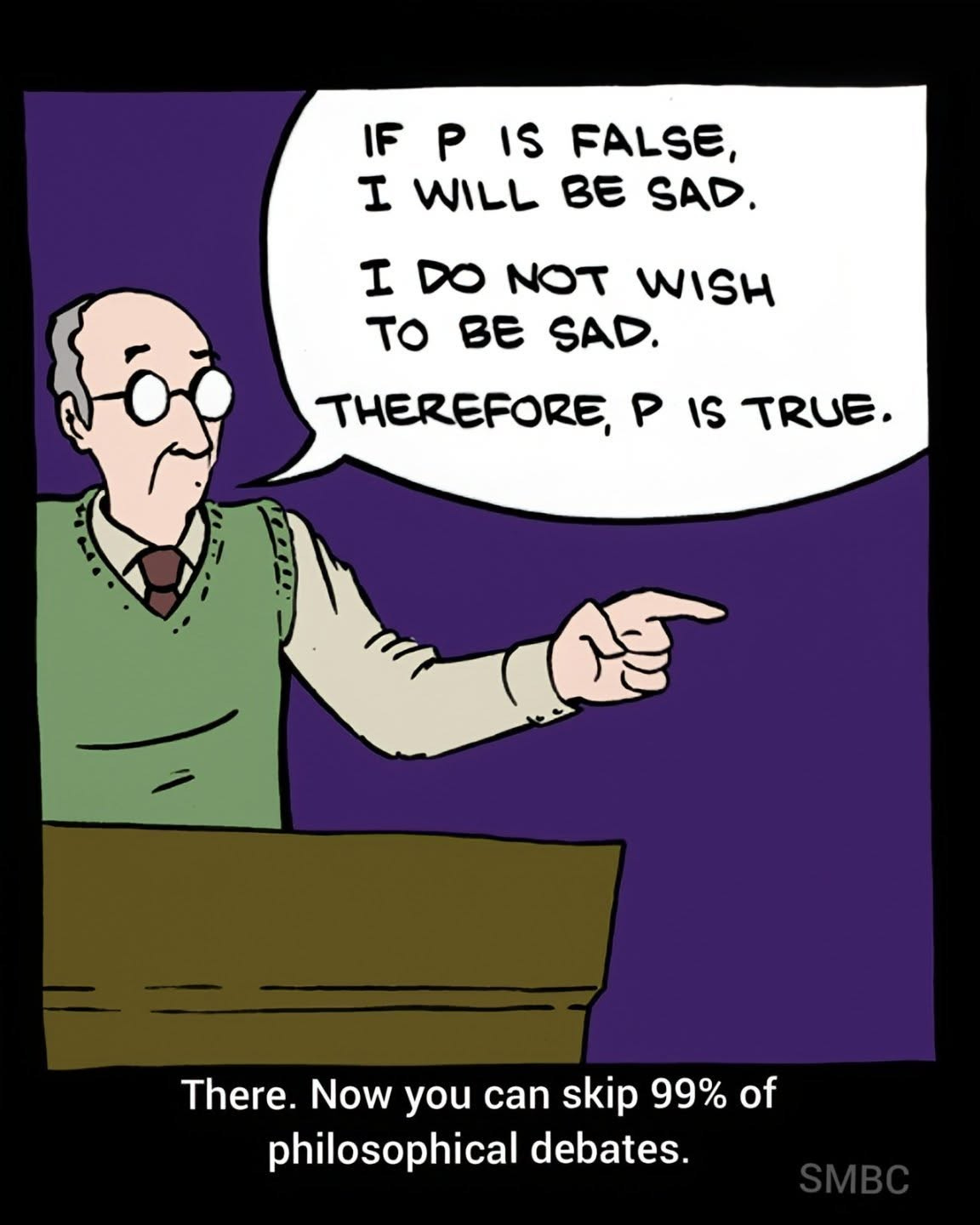
The fact is, you don’t need to explain with long words why you believe in God. If you do, then you don’t. It’s that simple.
I don’t know if anyone reading this has ever believed in Hashem, but I have. I still do. Hashem exists because he does. Just like the chair in my room and the family in my life, he exists. I feel the way he affects my being. I talk to him. Sometimes he answers, in his own way. He’s simply real. I need no proof or answer to explain his existence rationally, not any more than I do the chair.
So atheists don’t see he exists. That’s Kareis. It sucks. I don’t need to prove it to them. I believe it because I see it. Not everyone does. And that’s sad. But it’s not my problem.
I’m sure I could create some philosophical proof that the chair exists. But I feel no need to. By the chair, the quickest way to prove the chair exists is to sit down. Yes, it could be you are imagining the sitting and you need philosophical proof. But you don’t really need it. Sitting is enough.
By God, the quickest way to prove he exists is the same: Talk to him. Trust him. Rely on him. And you will soon see he does. Yes, it could be your imagination. But it’s not. You don’t need proof. You just need to bring God into your life.
I’m no philosopher. But I do own a chair. That is enough.
Related posts:


The level of zilzul in this post is honestly breathtaking and disappointing.
It's also not clear that you even read the essays that you're criticizing - or more accurately, whose authors you're cavalierly claiming don't believe in Hashem.
None of the essays are written in a particularly philosophical style; even Rav Rosensweig's, which uses the most sophisticated language by far, doesn't come close to the references and vocabulary used by Rav Soloveitchik. If you think they are, that may say more about you than about them.
Even if it were true that they wrote in a more complex academic or philosophical style - if that doesn't work for you, that's fine. I don't like listening to people who don't have the vocabulary needed to make points more nuanced than "its very good" or "really important -- super incredibly important." But how can a person casually disparage their content as "gobbledegook" instead of either giving it the time it deserves to understand what they're saying -- as thousands have done for the Rav and have come away richly rewarded -- or simply put it aside and say 'not for me'?
Happens to be that Rav Soloveitchik and Rav Lichtenstein both wrote about the basic sense of experiencing Hashem directly. I encourage readers to take a look at Rav Lichtenstein's essay in particular and compare his nuance and sensitivity, especially his recognizing the validity of other perspectives and experiences, to Daas Yochid's presentation in this post — https://etzion.org.il/en/philosophy/great-thinkers/harav-aharon-lichtenstein/source-faith-faith-itself (especially the section at the end, starting with "The greatest source of faith").
This exact idea was also used by many if not all of the five rabbanim dismissed as engaging in 'gobbledegook theology showing they don't really believe.' As above, the fact that you don't see value in rational attempts to prove Hashem - that's fine, no one's going to force you to engage. But can't you recognize that there are other people who are built differently, for whom this type of discussion is important? Does everyone's faith experience have to be exactly like yours? Do you not see the obvious flaw in your approach that would make it valuable for their to be other approaches that can be used to supplement or support?
Finally, an overwhelming amount of space on this blog is dedicated to pointing out problems with the yeshivish community and calling for people to work on these issues (in addition to espousing lets say 'non-traditional' theological views and reflexive putdowns of a caricatured modern orthodox community). Here, we have laymen in the modern orthodox community working together with rabbanim to actually work on a real issue in the modern orthodox community - sharing perspectives on emunah and helping people ground their faith or take their relationship with Hashem more seriously. Meaning, they've identified a significant issue and took a step to address it rather than ignore it or blame others for the problem. But your response to that is not to applaud it and say look at the modern orthodox community, they're recognizing they have an issue and they're actually doing something to work on it. Instead, you denigrate the effort and describe the rabbanim themselves as closet kofrim pulling the wool over people's eyes with philosophical gobbledegook. Sad testament to the power of zilzul.
This post could easily have been written in a way that makes your point while also respecting both the rabbanim themselves as well as their approach to emunah - much of which aligns with your own -- instead of in a way that denigrates and insults. seems clear to me which one reflects Torah values and which reflects modern discourse.
You mock Soloveitchik and I totally agree he writes extremely dense (remember: he learned English entirely by reading the dictionary) but he says basically exactly this about his belief in God.
Does having a deeply personal belief like this give you more empathy for those who may not "experience" God like you do?
Benjamin The Apikorus signing out