
Halacha, Morality, and Hareini: A theory of Torah Shel Baal Peh
How eternal values get updated

Edit: I now think that Halachic updating has hard limits. I still think Halacha does evolve in ways described in this post, but now I think that any halacha a Sanhedrin wouldn’t have to bring a korban on because its a mefurash pasuk cannot be updated at all. That would include homosexuality.
I love Carl Bark’s Duck comics.
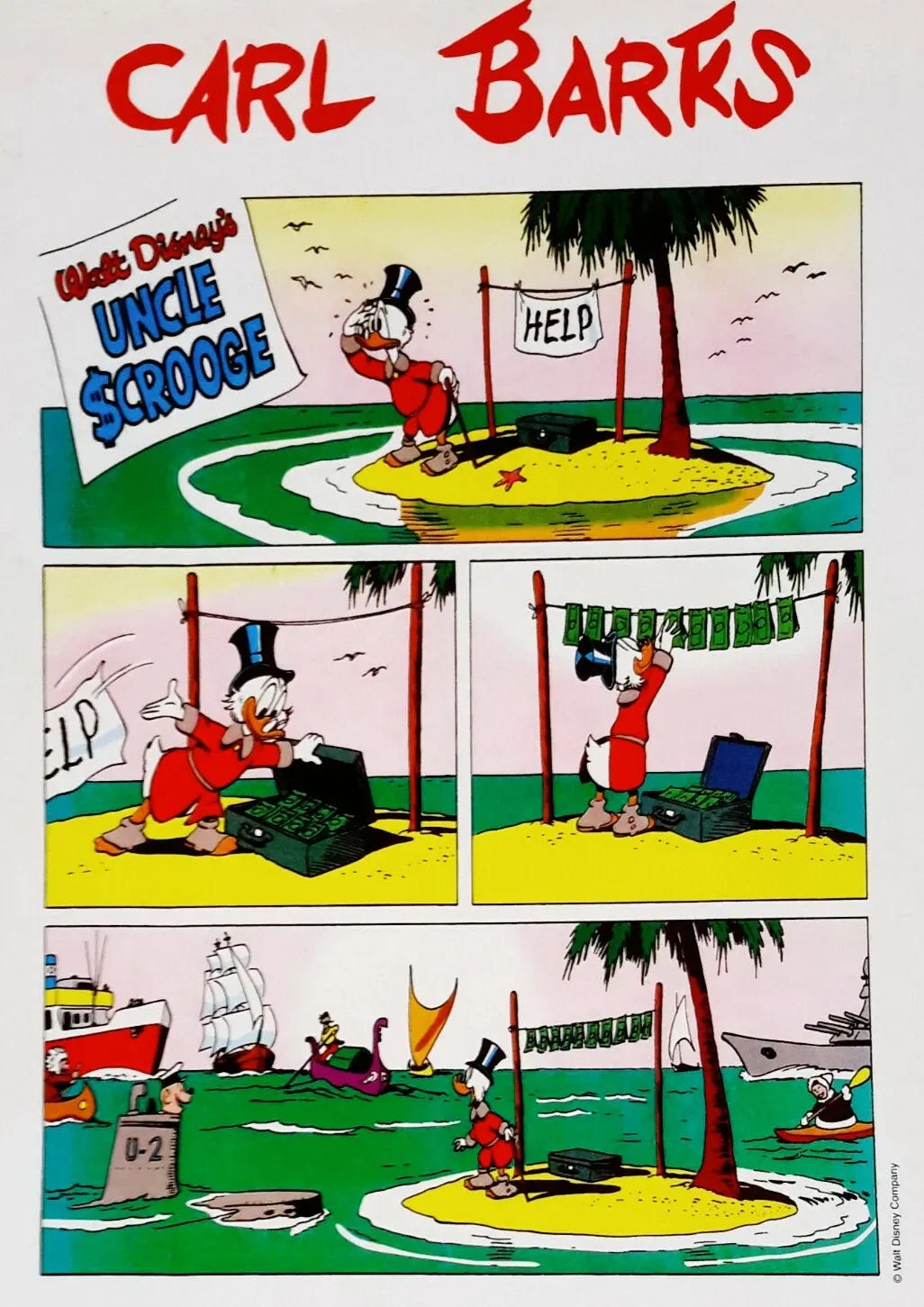
I have read every comic he’s written and own many of the books. The newest books, uncensored, have this odd disclaimer:
“"This previously published content includes negative depictions and/or mistreatment of people or cultures. These stereotypes were wrong then and are wrong now. Rather than remove this content, we want to acknowledge it's harmful impact, learn from it and spark conversation to create a more inclusive future together."1
I found that language fascinating. Were wrong then and are wrong now? I can certainly understand that they are wrong now (and I’d agree with that) but were wrong then seems like a stretch… why were they published then?
A few weeks ago, I came across a fascinating Gemara in Daf Yomi:
רַבִּי יְהוּדָה אוֹמֵר: אַרְבָּעִים שְׁלֵימוֹת וְכוּ׳. אָמַר רַבִּי יִצְחָק: מַאי טַעְמָא דְּרַבִּי יְהוּדָה – דִּכְתִיב ״מָה הַמַּכּוֹת הָאֵלֶּה בֵּין יָדֶיךָ וְאָמַר אֲשֶׁר הֻכֵּתִי בֵּית מְאַהֲבָי״. וְרַבָּנַן? הַהוּא בְּתִינוֹקוֹת שֶׁל בֵּית רַבָּן הוּא דִּכְתִיב.
The mishna teaches: Rabbi Yehuda says: He is flogged with a full forty lashes, with the additional lash administered between his shoulders. Rabbi Yitzḥak says: What is the reason for the opinion of Rabbi Yehuda? It is as it is written: “And one shall say to him: What are these wounds between your arms? Then he shall answer: Those with which I was wounded in the house of my friends” (Zechariah 13:6). Rabbi Yehuda understands that this verse is referring to one with wounds from lashes administered between his arms, indicating that there is one lash administered between the shoulders. And how do the Rabbis, who hold that one is flogged only thirty-nine lashes, explain this verse? They explain that this verse is written with regard to schoolchildren struck by their teacher for laxity in their studies, and is not referring to lashes administered by the court.
Now, in this Gemara we see clearly that in Chazal’s times, the schoolteachers would whip the child hard enough to leave wounds (black and blue marks?) on the back between the shoulders. If one would witness a teacher, parent or rebbe do that today, they would be required to call CPS. (Corporeal punishment is legal in most states - though New Jersey bans private schools, unlike New York - but leaving a black and blue mark or wound generally makes it reportable).
Should we put the same Disney disclaimer on the Gemara? I certainly think it is wrong now. But I also think it was wrong then - even back then, giving a child a whipping should have been considered cruel. How then, do we understand this Gemara?
This is not the only Gemara like this. There are Gemaros that seem to possibly be OK with rape, the halachos of a father marrying off his daughter (though Chazal banned that) and the whole issue of child marriage, and even possibly the whole sugya of Malkus itself - The Lev Tahor cult reinstituted Malkus to horror. (Can you imagine anyone being ok with a little 13 year old boy or 12 year old girl who just hit puberty being whipped, even if they were warned?). Has halacha been updated now that we understand it was wrong? Or have the times changed and it was ok then? Or perhaps, is whipping thirteen year olds is actually the Torah ideal?2
This leads me to R Scott Kahn’s post, where he quotes a fascinating R Kook to explain why Chareidim should go to the army:

“The natural people who are not learned have many advantages over the learned ones, as their natural intellect and inherent morality have not been corrupted by the mistakes that arise from [talmudic] learning, and through the weakening of strength and anger that comes together with the yoke of [talmudic] learning… The learned ones must always acquire for themselves, as much as possible, the natural talent of the masses, whether it be regarding an outlook on life or being aware of natural morality, and then they will be able to develop their intellect more and more”. (The horribly stilted translation is clearly Marc Shapiro’s - Ash).
R Scott goes on to use this R Kook as an argument for Chareidim serving in the army, in that the internal moral sense says that it isn’t fair.
While many of the more yeshivish commenters expressed shock at this R’ Kook, they need not have to. R Kook’s point is obvious and intiutive - everyone has a natural sense of right and wrong instilled in them which can be corrupted by overthinking. We are all familiar with those (sadly, I once numbered among them to my eternal chagrin) who, for example, violate copyright and steal music because Halacha largely lacks this measure, ignoring and giving up their inner sense of fairness and morality due to a mechanism which the outdated halacha lacks3.
However, unfortunately, this R Kook does not help R Scott’s cause at all. Because if learning Torah can corrupt this internal sense of morality, al achas kama vekama the outside world can. The nonstop pro-IDF messaging of how it is the biggest mitzva can certainly affect this sense of morality. So can the messaging of the external world that learning Torah is not that valuable. Thus, I don’t think one can use R’ Kook unless one finds those not exposed to either messaging.
However, perhaps we can use R’ Kook to answer our question on the Gemara on updating halacha to fit with morality. But first a digression:
R Steven Gotlib has an excellent post on Pirkei Avos and why he left Conservative Judaism to become Orthodox:

(Quoting R Asher Weiss): This masechta is unlike any other. All other masechtos discuss matters of halachah; this masechta discusses mussar and middos (ethics and character traits). As such, one might have thought that a person could understand mussar and middos by himself through his moral intuition, and that they are not part of the mesorah. The Mishnah teaches us that this is not the case. A person may not deduce mussar and middos himself; they were given at Sinai and handed down from Moshe to Yehoshua.
This quote from R Asher seems at first glance seems dramatically opposed to R Kook. But is it really? Lets look at the end or R Gotlib’s post, seemingly unrelated:
I left the Conservative Movement because it was signaled to me time and again from both laypeople and rabbis within the movement that there was no room socially for someone who kept Shabbat/Halakhah in the way I did. It had nothing to do with egalitarianism, rejection of academic approaches to texts, politics, rebellion, etc. When I started walking to shul, people there started calling me Orthodox and encouraged me to attend Orthodox shuls and youth organizations instead, where I would have more peers my age doing the same. I distinctly remember thinking to myself "I guess that means I'm Orthodox now." That transition was not despite the Conservative community I was otherwise part of, but was because the community collectively preferred to see me become Orthodox fully than try to stay within the movement while being more observant than the average congregant.
Why did the Conservative movement fail in such a strong way? The classic yeshivish answer is because they tampered with Halacha or tried updating Halacha, and there’s an element of truth to that. But the real answer isn’t that they updated halacha - Orthodoxy does it too in its own way, as we will see - it’s that they compromised Halacha to match modern-day needs, be it modern day morality or convenience. There was no real Halachic basis to allow cars to be driven, people were doing it anyway, and we needed a kulah to allow it, and the conservatives invented one. This led to legitimization of “halakhic” eating dairy in nonkosher stores, “halakhic” women rabbis, and “halakhic” gay marriages. All this while the laity ate traif in all stores, had no rabbis, and married non-Jews. There was no halachic updating here, it was legitimization of what everyone is already doing anyway. Thus, of course someone like R Gotlib who took halacha seriously had no place in the Conservative movement, because what the conservative movement did to Halacha can hardly be called serious!
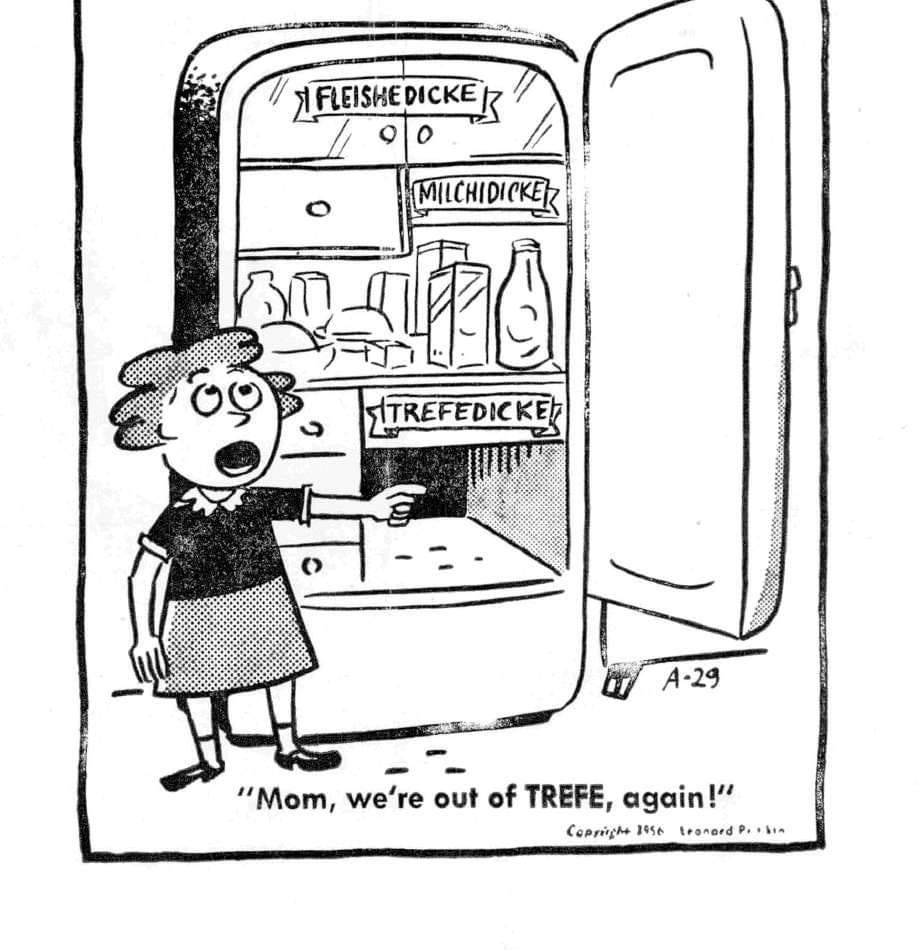
Imagine, if you will, the USA descended into an anarchistic hellhole, where no-one follows the law. Imagine if instead of enforcing the law, the US decided to repeal or change the law to match what the people were already doing. That will not make people respect the law more nor keep it. It merely demonstrates the irrelevance the law has. However, such a scenario is irrelevant to a situation where people follow the law but are trying to update it as necessary. The analogy to halacha is obvious. Only once Halacha is taken seriously and is not updated to merely suit whims or external pressures can one actually update it with effect.
Let's now return to our original questions: How to deal with the Gemaros? And is R Kook actually opposed to R Asher Weiss?
I would like to create a theory of Torah shel Baal Peh and its updating based on Morality.
Some background:

R Kook is of the belief that the theory of evolution shows us how the world always improves slowly, as it works towards the Messianic Era. The Rambam is of the belief that the Torah was given according to its era, and the point of it was to eliminate polytheism. The vast majority of mitzvos were given as a countermyth - a counterpractice to the prevailing idolatrous practice of that era. Some were basic morality. Some mitzvos, however, were given as compromise mitzvos - the Rambam famously picks Karbanos - because the idolatrous beliefs were so deep, and sacrifices so common, the Torah could not completely eliminate the practice, and was thus forced to compromise, and allow them in limited aspects, so that the masses could be slowly weaned from them. (R Kook goes so far as to say the Sanhedrin will eventually find a drasha to eliminate meat sacrifices entirely when Moshiach comes.) Others, such as R Moshe Dovid Cassuto and R Joshua Berman, have taken the Rambam’s approach to the Torah and applied it to the creation stories, the fallen angel story, the flood story(ies?), and tower of Babel story that they are countermyths to rewrite ancient mythology that the Jews were used to in monotheistic form.4 Some others, most prominently R Jonathan Sacks and R Dr. Raphael Zarum, have applied this approach to seemingly immoral mitzvos as well, such as slavery, onus umefateh, and eshes yifas tohar, that they too were given to slowly wean the Jews off immoral practices.
However, this sounds good, but what are the limits? How do we know what to update and what not? Can we allow gay marriage nowadays?
Lets be even more Jewish and answer this question with a question. Here’s an obvious question on R Kook: If Hashem can do revelation in the people’s heart, and that is morality, why couldn’t Hashem reveal the correct morality in their hearts when the Torah was given, and then all would be disgusted by slavery at once, and there’d be no need for this progressive revelation?
I think the answer is obvious. Inner instincts are based off the society in which one lives. They are natural, innate and also easily influenced. Hashem doesn’t change the natural order, nor does he change people’s hearts (except by Pharoah). Rather, the changing morality is already implicit in the Torah’s teachings as lived by the masses, and the full development and implementation takes time.
Thus, the progressive revelation isn’t just based on any people’s inner instincts. It’s people who have lived a Torah life’s fullest instincts and have picked up on the inner morality of the Torah! Only those masses, who have lived a full life of Torah observance but are unlearned, can help halacha update, as there sense of right and wrong are based on the Torah’s internal instincts combined with innate morality. In contrast, someone Modern Orthodox may think gay rights are required and the Torah immoral, but that may not be because of his own inner morality, but rather due to the inner morality of all the TV episodes he’s watched with a happy gay couple looking moral. This is why there is no contradiction in my opnion between R Asher Weiss and R Kook - the inner morals are already innate in what the Torah teaches.5
Here’s how I think it works in a laboratory setting:
A kid grows up in a Torah based home. He lives his life regularly but unfortunately does not have the greatest brain. He goes to work, and keeps Halacha as he knows it. Growing up with the Torah’s values, he knows innately it is very wrong to embarrass someone. Thus, in a conflict with Halacha where he may feel he should correct the shaliach tzibur, for example, he will innately know that it is wrong to do so, while the more learned person may look at the Shulchan Aruch to figure it out. This is the advantage someone who knows halacha without the sources has over someone learned Over time, when this deep feeling becomes universal, a psak that had previously been understood to allow embarrassment will be reinterpreted or explained away - almost unconsciously.
I’ll explain more. A few years back, Dialogue magazine had a great article by R Menachem Zupnick of Passaic on Baalei Teshuva, unfortunately not available online. In it he notes that Baalei Teshuva, even those that know Halacha flawlessly, often miss the internal life of the Halacha.6 He brings this example: FFBs often resist a psak to eat on Yom Kippur, even when it is indubitably required for them to do so. In contrast, almost never does a Baal Teshuva hesitate to eat, for they reason while in the past it was forbidden for them to eat, it is now required for them to eat. In either situation they are following what the Torah says they should do - and they are right! Yet, that means the baal teshuva hasn’t fully grasped the inner living of an FFB where he knows instinctively that eating on Yom Kippur is bad. That instinctiveness, when transferred to morality, is what R Kook is referring to when he says a Lamdan is worse off than an Am Haaretz. The Am Haaretz who has lived a halachic life just knows it is wrong. The Lamdan can find heterim or tirutzim.
Another example: I know a Rav who was on a cruise ship when he realized the zmanim were miscalculated and it was closer to shkiah than thought. He warned a bunch of women to light faster, but some women still lit after shkiah despite him asking them not to. Why? These women are all people who have it deeply engrained to keep shabbos and also deeply engrained to light shabbos candles. Yet they still lit, because something internally told them that lighting was more important.7 The rov thought of a heter based on a chasam sofer as a limud zchus (I do not recall the details). One could imagine how if this repeated week after week, the limud zchus could make it into the accepted halachic canon. That internal battle - whether to light or not, clearly not influenced by the outside world’s morality or values - is precisely what is meant when in a similar morality-based scenario, the inner morality contradicts halacha and eventually changes it.8
I imagine that a similar process happened with hitting children. The values of Veahavta Lereyacha Kamocha - once farfetched to apply to children and women who were partially owned anyway - were slowly internalized based on years of keeping them. Perhaps the outside world influenced it as well, as of course we are not immune to its influences. Point is, when the halacha of hitting kids needed to be abandoned, it was not abandoned out of any great need to conform to the outside world nor due to pressure to keep up with some external target. Rather it came from conflict from the Torah’s inner morality: How can I whip my kid when every bone of my body knows its wrong due to values that were taught to me by the Torah? The halacha MUST mean something else. We must find some heter or reinterpretation - not due any ism but the values of Judaism itself9. Nowadays, we are forced to use creative reinterpretation and are sometimes stymied, but in the future, I imagine - like R Kook did - that the Sanhedrin could find a derasha to change it.
The same goes for women’s rights.10 In America, the Conservative Movement, while claiming fealty to Halacha, when allowing women’s rabbis clearly did not allow it due to believing the Halacha actually required it but rather as an appeal to external secular values, which of course kept moving the goalposts until we have nonJewish gay trans rabbis. That is not Halacha that can last. Its not even Halachic compromise. It is capitulation, pure and simple.
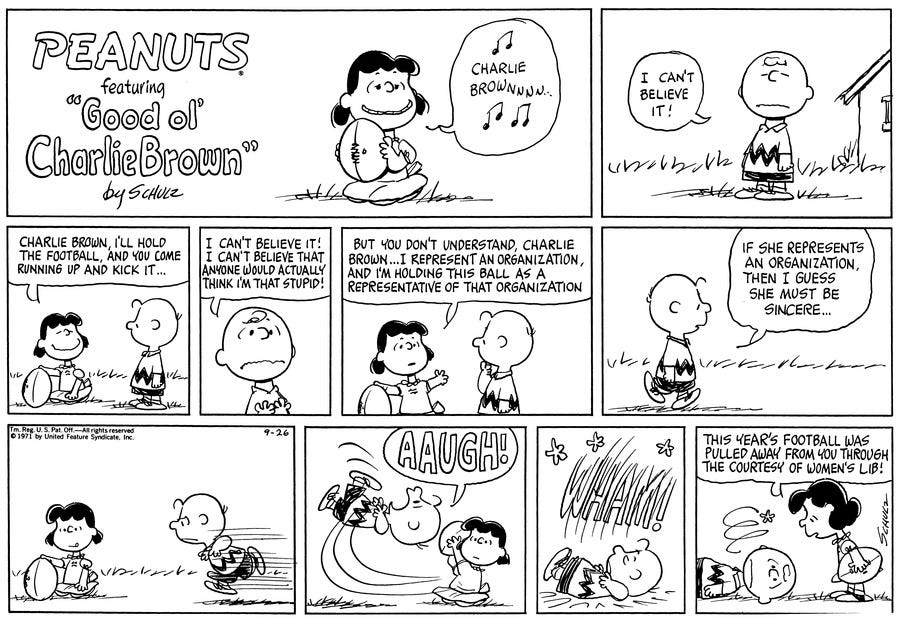
In contrast, in Israel, there is a small but growing halachic women’s right movement that may actually effect halachic change. Why? Because it isn’t a bunch of people with an essentially secular value system demanding that Halacha yield to it. It isn’t the equivalent of Modern orthodox lamdanim who have learned the basic feminist tracts and now have developed an “inner moral” conflict. Rather, it is deeply committed frum women who believe and would be moser nefesh for Hashem and halacha and feel - based on their frum upbringing and values that they learned and believe from Torah itself - that those values do not fit with the halacha as it is today. Those women could effect Halachic change slowly, by always being careful to stretch the parts they feel are immoral while keeping Halacha. These women aren’t wearing tefillin, but they are saying Kaddish for their sons killed in war. They are learning Torah, including Torah Shel Baal Peh, on their own. They are making sure the shuls have mechitzos but are equal on both sides. Those women aren’t trying to feminize Torah, they are trying to make the Torah fit with the Torah values of Kavod Habrius that they took from the Torah itself and sincerely believe in.

That is how halachic values change, and that is how we now know it is immoral to whip children, marry off twelve year olds, and divorce women without their consent. It is from people who used their internal values which they believed derived from the Torah itself.
We can answer our question. Was it wrong then? Yes, but we only know that because back then they kept the halacha that they thought correct. Had they not, we would have not refined halacha to the point of moral clarity, or we would have lost halacha entirely and assimilated. This refinement - based on internal values - is what allows Torah Shel Baal Peh to update. For example, Chazal cannot want to intentionally update halacha and say it means an eye for money and not an eye for an eye. Rather, they must be entirely innerly morally convinced that it cannot be the case - and this allows for the necessary reinterpretation.11One can also interpret the story of Pesach Sheni and Tzlafchad’s daughter’s in a similar way.
Sidebar: R. Haym Soloveitchik has a very famous essay Rupture and Reconstruction where he discusses the loss of the mimetic traditions and the return to texts. In brief, everyone used to learn from their bubbies and zaidies how to live a halachic life, and the texts were largely subservient to that life, while after the Holocaust, everyone had to relearn Halacha, and Judaism became a much stricter Halachic tradition because we are trying to conform with texts and not live life naturally. While he focuses on the transformation of Halacha, the same has happened to inner morality, where it is now expected that ones morals have to match what the text says regardless of belief. One cannot say you follow the text without believing in it, one must accept the values as well. (This is true in the outside world as well, where one for example must approve of homosexuality regardless if one has inner discomfort with it.) This results in extreme discomfort and hate of halacha in some cases, most prominently, for example, in tznius. Since tznius is often taught in a text-based way (Rupture and Reconstruction style) with just sources (one must cover up until here, one cannot sing etc) and then the morals are expected to match those halachos as taught in the text (I cannot be proud of who I am or stand out from the crowd), this reverses on its head the way halacha was originally meant to be and results in revulsion of tznius. If one was taught the opposite, of, for example, a holisitic Torah approach of gadlus haadam, and the halachos were expected to be learned in that holistic Torah outlook, I suspect there would not be such hate. (There is a great book that attempts to do this, Reclaiming Dignity, where tznius is taught as inherent dignity, and the halachos are expected to be understood and applied in that context and in the communal context). I suspect while Tznius is the most obvious, there are other halachos that are relevant to this theory as well.
All this brings us to our big story: The Hareini YU LGBT club and Yeshiva University. Without delving into the specifics of the court case, the settlement, and the eventual shutting of the club, this issue illustrates our dichotomy of halachic change to a T12. The name Hareini is based on the mitzvah of “Hareini Mekabel Al Altzmi Mitzvas Veahavta Lereacha Kamocha”. That is the supreme Torah value, as Rabbi Akiva says. And having met many frum gay people myself, many of them are fully committed to Halacha and cannot understand how Halacha can ban them for this.
However, the current day movement to allow gay rights in Halacha is almost never built on the Torah’s inner values. It is rather based on an external value system of everyone is entitled to their own happiness and should be allowed to live their lives that way. There is an expectation that Halacha just needs to find a way. In short, Halacha is required to compromise and bend to this external value - and that is a recipe for failure. It will end in halachic destruction no different than the Conservative movement. I’m not saying an actual halachic change cannot be potentially made. I don't know if it's possible, but perhaps it could be. What I am saying is the one we see being pushed today is not it. And it is easy to tell. A real halachic push would have much more respect for halacha, attempt to bend as little as possible, slowly find temporary dachuk heterim based on Onnes or Es laasos Hashem13, and a feeling of we are stuck - we must find a solution. Only then would it slowly spread. It will not have the feeling of a civil rights movement of “we are totally right and halacha is wrong” that today’s YU Hareini push is leading. It will rather come out of desperation, of a feeling that the inner Torah values must find some sort of a solution so frum gay kids can live a frum life. It will happen slowly, without fanfare or parades. You will know it when you see it, and Hareini is unfortunately not it.
Though they did censor some stuff, like this comic, originally published before 1940s…
And of course, the famous moral issues of slavery and many other ones.
Obviously, many poskim do hold copyright exists, but the fact that so many can violate it because halacha may not have it instead of focusing on the morality illustrates my point.
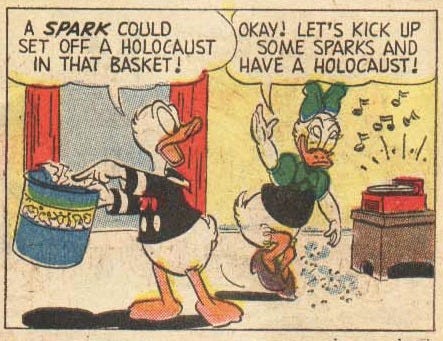
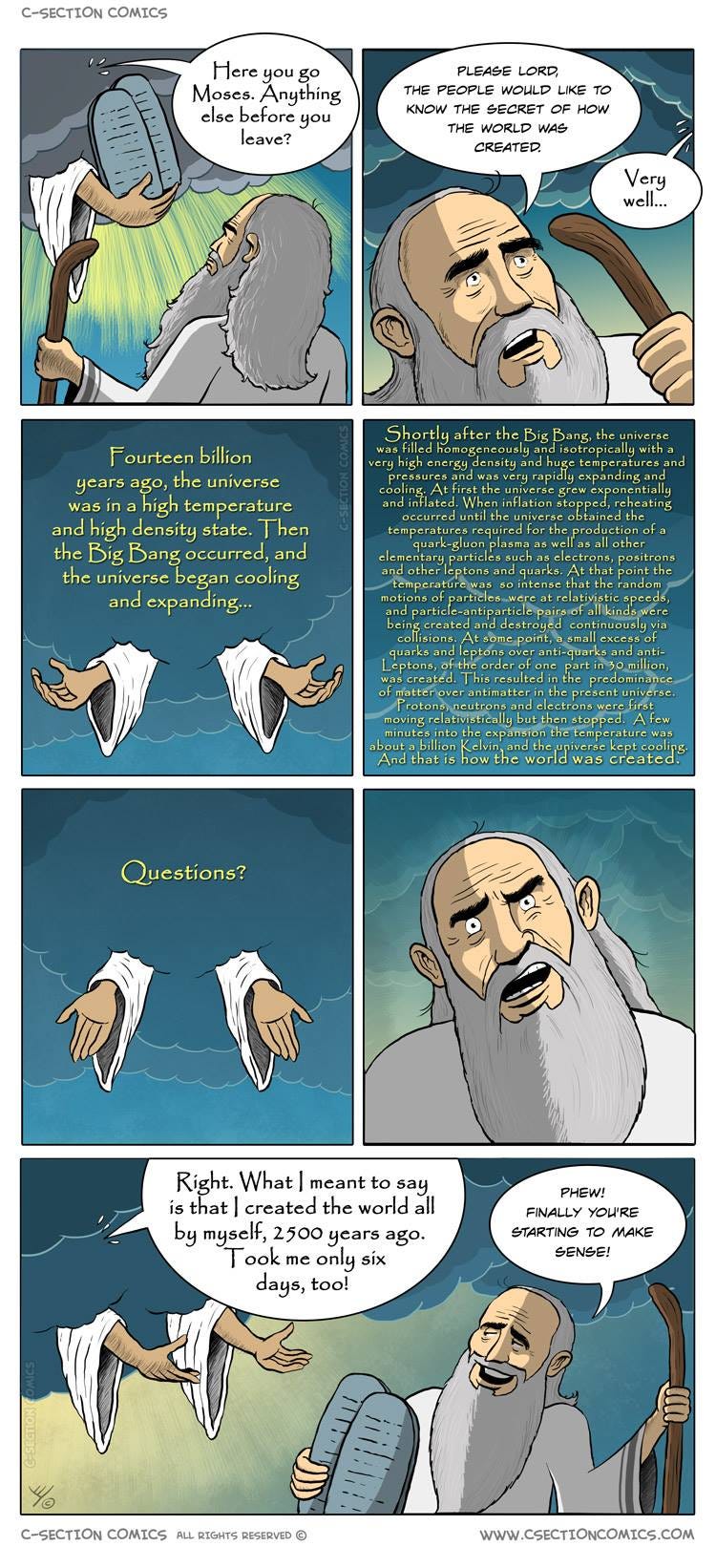
As this comic puts it, rather chutzpadickly. I personally don’t think this is necessary at all, as one does not need to assume they couldn’t understand, but rather that it wouldn’t survive orally as myths without the countermyth form.
I don’t think R Kook would actually agree with this. I do think he would say something similar, that the state of innate Jewishness provides this ability, and that people in Israel living Jewishly together would have the requisite innate morality. That said, this is mystical hardly amenable to a rationalist viewpoint. My view is trying to use R Kook’s idea and combining them with the Rambam’s rational view of Mitzvos.
I discussed this internal life here:

This is what I suspect Chazal meant by women's Binah/intuition. Due to them often living a halachic life without knowing the reasoning, unlike men, they would grasp the moral nuance innate in Torah better.
The people who in my mind most embodied this living a life of internal morlaity were Rav Pam zt”l and R Ahron Lichtenstein Zt’l. On different ends of the Orthodox specturm, but both lived a life full of middos based on the Torah’s inner morality, not strict halacha per se.
This point is largely distilled and learned from R Eliezer Berkovitz ztl.
Needed to include this comic somehow, but in the main text it is just too distracting.
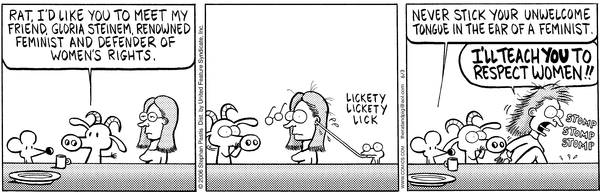
As we said, we nowadays cannot do drashos, so we cannot reinterpret many immoral laws out of existence.
Rim shot.
And perhaps one day a Sanhedrin will reinterpret the words, make a drasha, or even understand them as referring to Avoda Zara practices.
My Response
https://vitalistjew.substack.com/p/halacha-does-not-evolve-we-do
While I'm not going to comment on the halakhic or theological legitimaticy of this approach, this distinction between internal evolution and external influence captures very well the tendencies of conservative groups. While they may resist change which clashes with their texts and traditions, they are not immune to shifts in their own perception of their values and practices.
However, I think it is inaccurate to create some kind of dichotomy between the shift coming from 'internalized Torah values' and 'external learned values'.
Firstly, there is no objective definition of actual Torah values according to your model, only am interplay of elements that it's interpreters and practicers can choose to emphasize or deemphasize. What determines how those are emphasized? Real world influences. For example, under different circumstances the Jews could have hypothetically worsened their treatment of non-jews as part of the 'torah values' of recognizjng the Jewish people's unique status (and this actually happened during certain eras). What tells you that Thomas Hobbes interpretation of tzelem elohim reflects a deeper Torah value than the strong borders erected by chazal of insider vs. outsider? (This is one example out of thousands.) The answer: either the broader zeitgeist or internal workings. The designation 'internalized Torah values' is simply a label assigned to connote legitimatacy, but devoid of actual meaning.
Secondly, this distinction holds true not so much due to differences between Torah vs. conflicting values, but due to the tribal distrust of outside influences. If it's packaged in the right 'yiddishe' terminology= good, if it's packaged in academic or secular or christian or whatever terminology= bad. The reason why such criteria are successful (as opposed to for example the conservative movement which abandoned this commitment) is because it reinforces identity and therefore commitment. Not because one is more reflectove of "Torah true values" and the other isn't.
Thirdly, if you trace many influences historically this has not been the case at all. Of course countermyths and counter traditions have a prominent role in the formation and evolution of Judaism, but adoption (at times even without significant repackaging) has arguably been more prominent. If organic evolution within the Torah loyal community is paramount, you ought to delegitimize traditions such a lighting the menorah on chanukah, yizkor, classical monotheism, and many more. The fact that you don't shows that your true criteria doesn't question the origins, but the current compatibility with accepted Jewish norms and perspectives.